What are the main local marketing trends?
Local marketing is about getting people near you to find you, trust you and come through the door. The tactics have changed less than the headlines suggest. Your Google listing, your reviews and a website that works on a phone still do most of the work, and the newer channels (location-targeted adverts, retargeting, short video and AI assistants) sit on top of those basics.
Oregon Web Solutions, a digital agency in Oregon, picked out ten local marketing trends in 2019: Google listings, online reviews, geofencing, in-person events, retargeting, giveaways, local Facebook adverts, live video, WordPress websites and search engine optimisation [1]. Most of them still apply. The statistics on its graphic carry no sources, so this article uses current, sourced research where it can and treats the 2019 figures as the agency’s own summary.
Your Google Business Profile comes first
For most local businesses the single most useful thing you can do is set up and maintain a Google Business Profile, the free listing that used to be called Google My Business [2]. It is what appears in Google Maps and in the “local pack” of three businesses that shows above the normal results for searches such as “plumber near me”.
Google says local results are mainly based on three things [3]:
- Relevance: how well your profile matches what someone searched for. Complete, detailed information helps.
- Distance: how far you are from the person searching, or from the location in their search.
- Prominence: how well known you are, based on things like links to your website and how many reviews and ratings you have.
Google is also clear that you cannot pay for a better local ranking [3]. In practice that means verifying the business, filling in your hours, category, address and attributes, keeping them up to date (including holiday hours), adding real photos, and replying to reviews [3]. A surprising number of small firms still don’t do this: BrightLocal’s research found only 35% of small businesses had a Google Business Profile [4].
Online reviews and ratings
Reviews are the clearest trend that has only grown stronger. The 2019 graphic said 97% of consumers look at reviews when searching for local businesses. BrightLocal’s 2026 Local Consumer Review Survey arrives at the same number: 97% of consumers read reviews for local businesses, and 41% say they always read them, up from 29% a year earlier [4].
What people want from reviews has also become stricter [4]:
- 47% won’t use a business with fewer than 20 reviews, and only 9% will use one with five or fewer.
- 74% only pay attention to reviews written in the last three months.
- 31% will only use a business rated 4.5 stars or more.
- 37% say an owner’s reply is one of the things that makes them trust a review.
The practical point is that asking for reviews is an ongoing job, not a one-off push. Ask every happy customer, make it easy with a direct link, and reply to every review, good or bad. Reviews also feed directly into the prominence factor Google uses for local rankings [3].
Where people find local businesses is changing
Google is still the main place people look for reviews and local recommendations, but its lead is shrinking. In BrightLocal’s 2026 survey, 71% of consumers used Google to read reviews, down from 83% the year before [4]. Use of ChatGPT and other AI tools for local recommendations jumped from 6% to 45%, making them the third most popular source, and Apple Maps use nearly doubled from 14% to 27% [4].
For a local business this is a reason to keep your details consistent everywhere: Google, Apple Business Connect, Facebook, Bing and the directories that matter in your trade. AI assistants and map apps draw on those listings and on reviews, so the same basics that help you in Google help you there too.
Location-targeted adverts and geofencing
Geofencing means drawing a boundary on a map and showing adverts or notifications to people with a mobile device inside it [1]. The agency’s example is a pizza restaurant targeting phones nearby at lunchtime [1]. Most local advertising now works this way even when it isn’t called geofencing: Google Ads, Meta (Facebook and Instagram) and other platforms let you target a radius around your premises or a list of postcodes.
The graphic claimed geofenced notifications get a click-through rate 15 times higher than other push notifications, but it gave no source and we couldn’t verify it, so treat that as a claim rather than a benchmark. Results depend heavily on the offer, the size of the area and how relevant the advert is to people in it.
Social media adverts, giveaways and video
Facebook and Instagram remain the main paid social channels for local businesses, mainly because of their targeting by location, age and interests [1]. Giveaways and competitions that ask people to like, share or tag a friend are a cheap way to reach more local people, as long as you follow the platform’s promotion rules [1].
The 2019 trend was live video on Facebook and Instagram. Since then short vertical video (Reels, TikTok and YouTube Shorts) has become the bigger format, but the principle is the same: show the people, premises and work behind the business. Video also turns up in reviews now, and BrightLocal reports that video reviews are picking up speed as a source consumers use [4].
Retargeting people who have already visited
Retargeting means showing adverts to people who have already been to your website, because most people need to come across a business several times before they buy [1]. It is usually set up with the Google Ads or Meta tracking tag. For local businesses with a small audience it is often one of the better-value paid tactics, because you are only paying to reach people who already know you exist. Make sure your cookie consent banner covers the tags, which is a legal requirement in the UK and EU.
In-person events
Events are the oldest local marketing tactic and still one of the most effective for trust. Workshops, open days, tastings, sponsoring a local team or having a stand at a fair let people meet you before they buy [1]. They also give you photos, video and content for your social channels and Google profile, and often lead to links and mentions from local websites, which helps the prominence side of local rankings [3].
Your website and local SEO
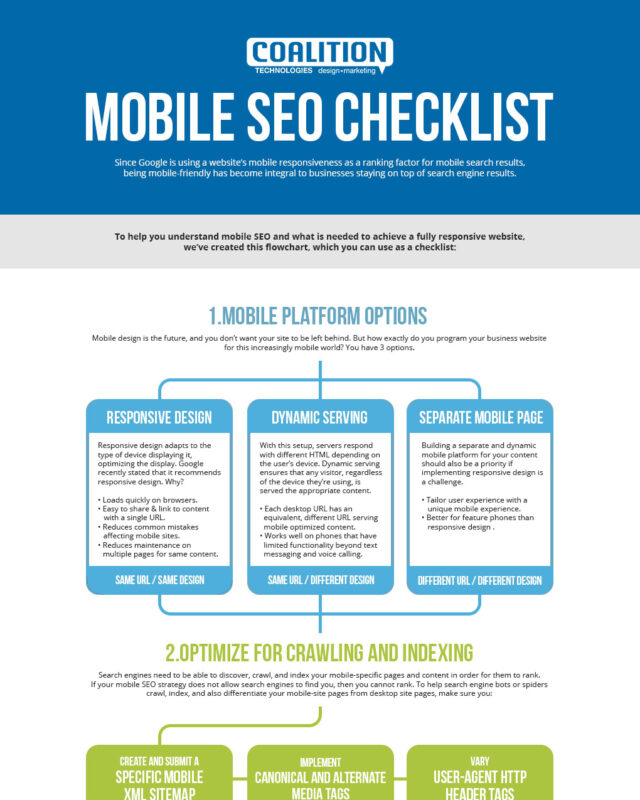
A fast website that works properly on a phone is still the base everything else points to. WordPress is the most common choice: it runs 58.2% of all websites whose content management system is known, or 39.5% of all websites [5]. Whatever you use, the local SEO basics are the same:
- A page for each main service, and a page for each location if you have more than one.
- Your business name, address and phone number written the same way on the site as on your Google profile.
- Clear calls to call, book or get directions, especially on mobile.
- Pages that answer the questions customers actually ask, which is what search engines and AI tools pick up.
Questions about local marketing trends
How do I market a local business?
Start with a complete, verified Google Business Profile, a steady flow of recent reviews and a mobile-friendly website with a page for each service [3][4]. Then add paid local adverts, retargeting, social media and events as your budget allows.
How many consumers read online reviews before choosing a local business?
97% of consumers read reviews for local businesses, according to BrightLocal’s 2026 survey, and 41% say they always do [4].
How many reviews does a local business need?
There is no fixed number, but 47% of consumers won’t use a business with fewer than 20 reviews, and 74% only look at reviews from the last three months, so a steady flow matters more than a big total [4].
What is geofencing in local marketing?
Location-based mobile advertising that shows adverts or notifications to people inside an area you choose, such as the streets around your shop [1].
What is Google My Business called now?
Google Business Profile [2]. It is free and controls how your business appears in Google Search and Maps.
Can you pay Google for a better local ranking?
No. Google says there is no way to request or pay for a better local ranking. You can pay for adverts, which are labelled as sponsored, but the normal local results are based on relevance, distance and prominence [3].
Sources
- Oregon Web Solutions, 10 Local Marketing Trends (28 August 2019), the creator’s article for this infographic.
- Google Business Profile Help, Get started with Google Business Profile.
- Google Business Profile Help, Tips to improve your local ranking on Google.
- BrightLocal, Local Consumer Review Survey 2026.
- W3Techs, Usage statistics and market share of WordPress.
Last reviewed 2 November 2026