

History
7 Wonders of the Ancient World Timeline and Map
The Great Pyramid of Giza came first, around 2584 BC, and the other six followed between about 600 BC and 280 BC.
This hub covers the home and the buildings around it, including DIY and building guides, fixings, cleaning schedules and how long appliances last, with a section on architecture and house styles. Each page credits the creator, sets out the full guide as text and checks quantities and ratios against supplier and trade guidance. Popular pages include types of screws and bolts, how much ballast and cement you need for concrete, a render mix ratio guide, an appliance life expectancy chart and American house architecture styles since 1600.
The Great Pyramid of Giza came first, around 2584 BC, and the other six followed between about 600 BC and 280 BC.

The city grew in booms: lower Manhattan towers before 1913, Art Deco Midtown around 1930, glass office blocks after the war, the Twin Towers in the 1970s…

Dishwashers and microwaves average about 9 years, washing machines 10, fridges and tumble dryers 13, and cookers 13 to 15.
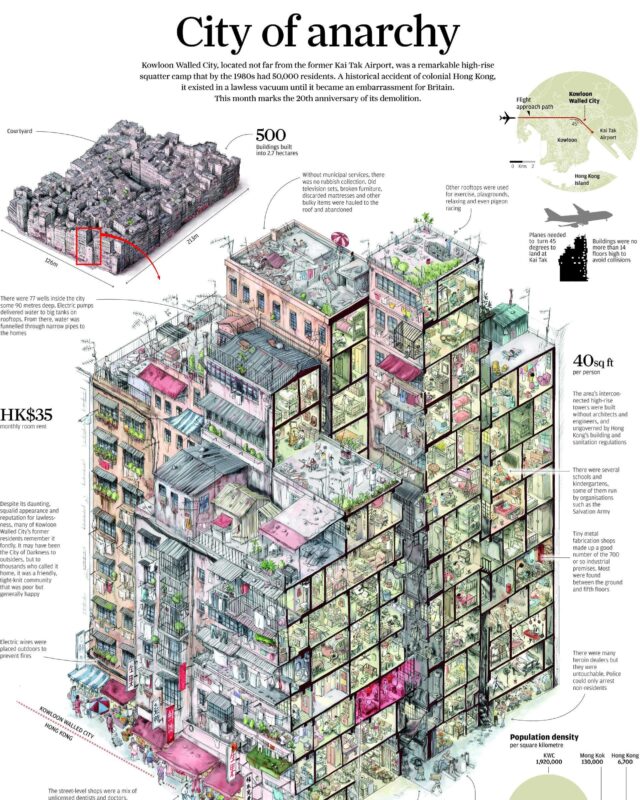
Left out of the 1898 lease that gave Britain the New Territories, it was largely ungoverned, and by 1987 about 33,000 people lived on 2.6 hectares.

The Great Pyramid held the record for more than 3,800 years, cathedral spires took over from 1311, and in 1884 the 555 foot Washington Monument overtook…
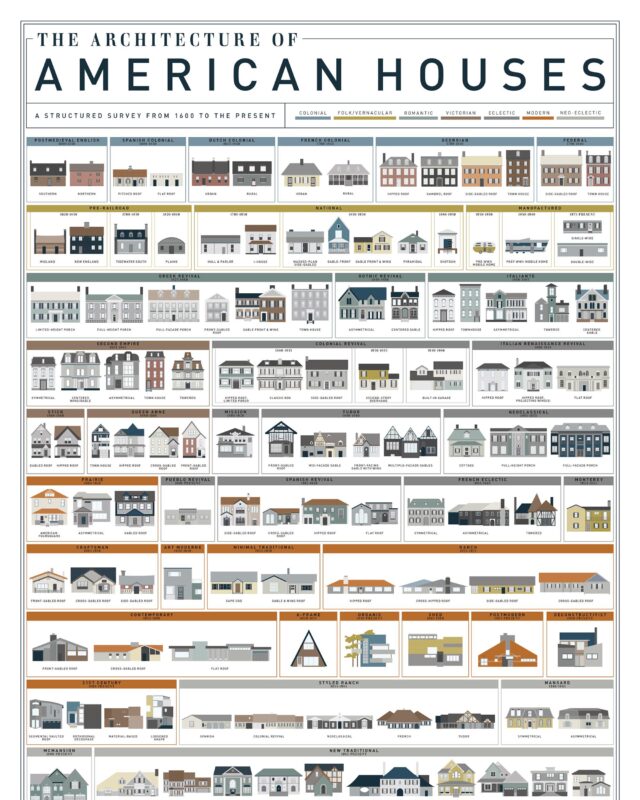
American architecture styles for houses fall into seven broad families that follow each other from the 1600s to today: Colonial, folk or vernacular,…

Fabrics are grouped by the fibre they are made from: natural fibres such as cotton, linen, wool and silk, synthetics such as polyester and nylon, and…
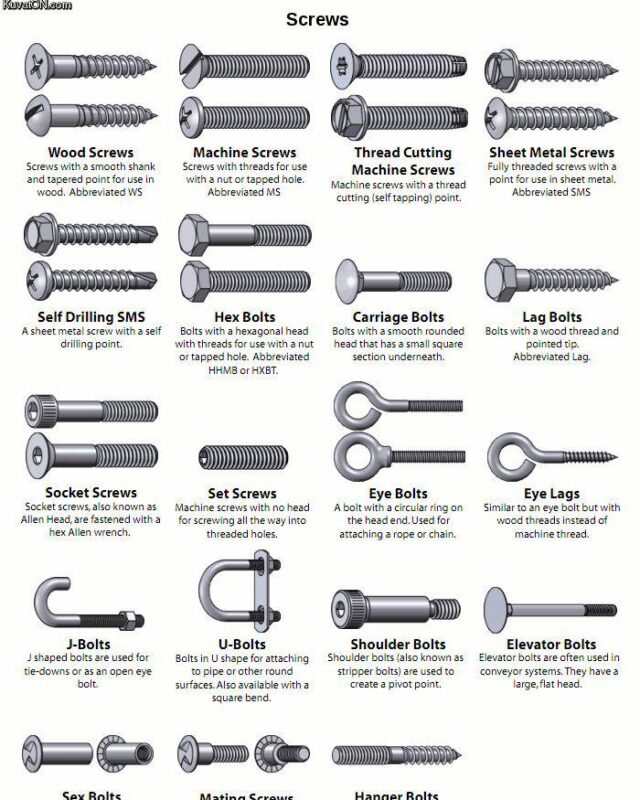
The main types of screws are wood, sheet metal, machine, socket, set and lag screws, and the main bolts are hex, carriage, eye, U, J, shoulder and sex bolts.
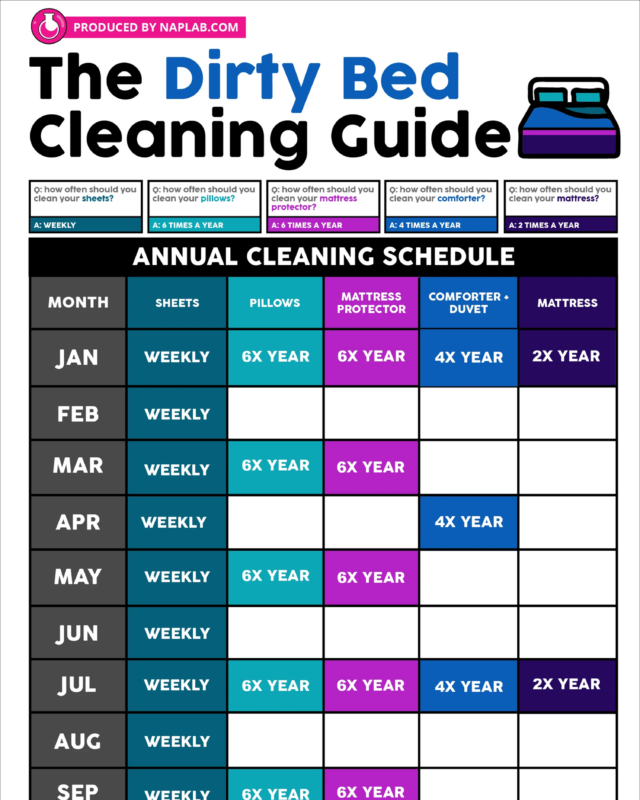
Hot washes at 60C help if you have a dust mite allergy.
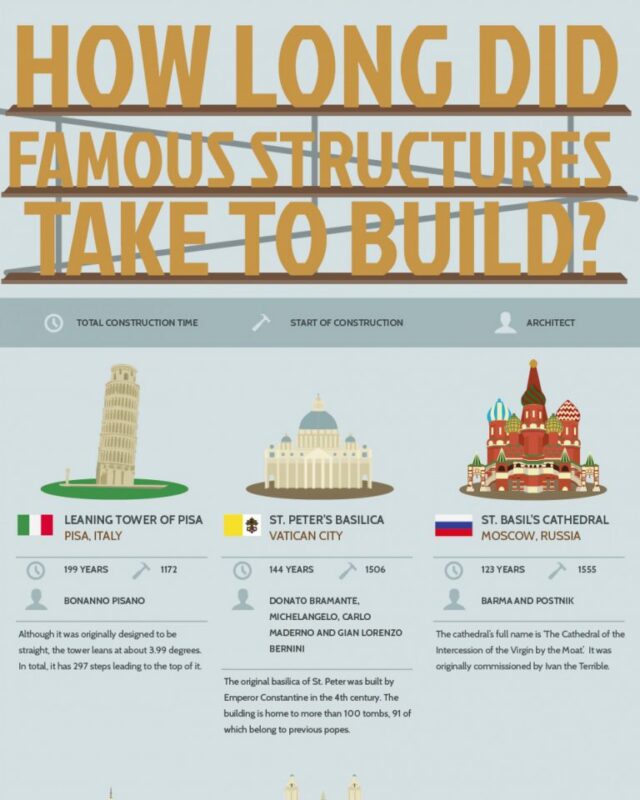
The Leaning Tower of Pisa took 199 years and St Peter's Basilica 144, while the Eiffel Tower took about two years and the Empire State Building just 13 and…
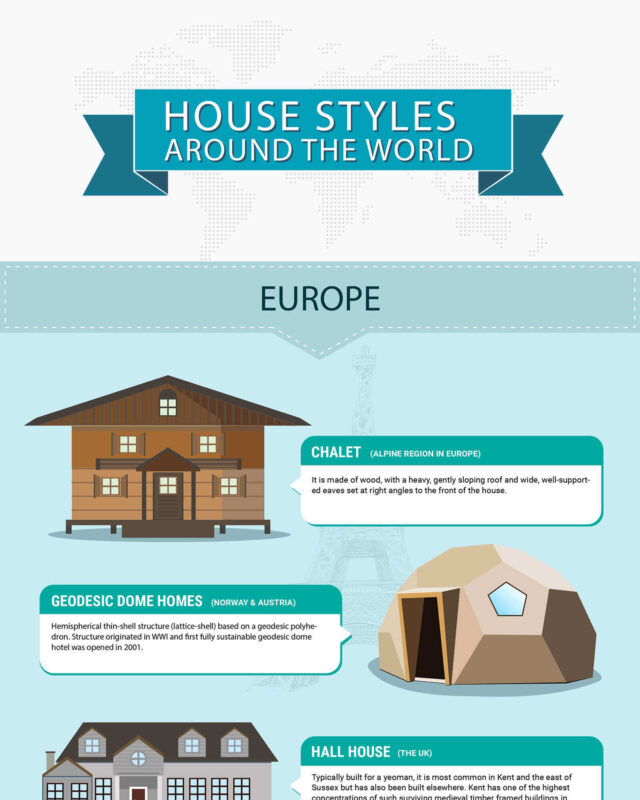
Different types of houses around the world reflect climate, local materials and way of life.
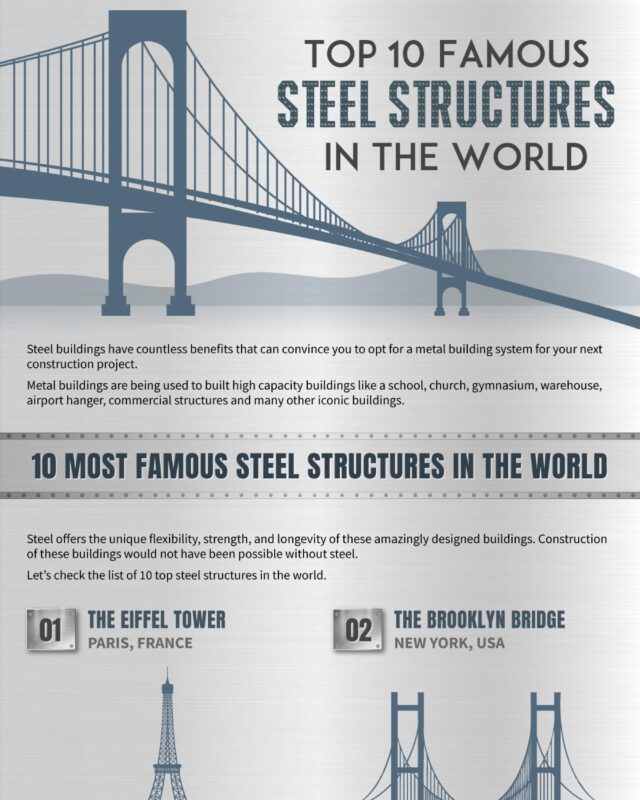
The Bird's Nest used the most steel, 121,000 tons.
The 16 infographics here fall into two groups. The practical ones cover concrete and render mixes, screw and bolt types, predator proofing a chicken coop, a bed cleaning schedule, fabric care, how long home systems last and the history of the lawn mower. The rest are about buildings, with house styles in America and around the world, how long famous structures took to build, steel landmarks, the New York skyline, Kowloon Walled City, the seven ancient wonders and an 1884 chart of high buildings.
For building work, TJC Transport's How Much Ballast and Cement Do I Need for Concrete gives a 1:2:4 mix for 20 MPa concrete and puts a cubic metre of it at 320 kg of cement with 1,800 kg of sand and aggregate. All Division Building's Render Mix Ratio of 6 Parts Sand, 1 Part Cement and 1 Part Lime sets render at 6 parts sand to 1 part cement and 1 part lime, mixed with water. Bolt Depot's Types of Screws and Bolts, Heads, Drives, Washers and Nuts names 61 fasteners and features, including 19 screws and bolts and 16 nuts.
The Appliance Life Expectancy Chart for Home Systems gives lifespans for 27 parts of a home, based on a National Association of Home Builders study. Dishwashers and microwaves last about 9 years, refrigerators 13 and kitchen cabinets 50.
For architecture, Pop Chart Lab's American Architecture Styles of Houses, 1600 to the Present sorts houses into 40 styles in seven families, from Postmedieval English homes of 1600 to the McMansion. RubberBond's How Long Did It Take to Build 32 Famous Structures has the Leaning Tower of Pisa as the longest build at 199 years and the Space Needle as the quickest at 1 year. Adolfo Arranz's Kowloon Walled City History, From Fortress to Park for the South China Morning Post shows the walled city growing from about 700 people in 1898 to 50,000 by 1990.
House styles, skylines and famous buildings also have their own section, Architecture.
TJC Transport gives 320 kg of cement, 600 kg of sand and 1,200 kg of aggregate for a cubic metre of 20 MPa concrete, mixed at 1:2:4. Its infographic also gives 1:3:6 for 10 MPa and 1:0.75:1.5 for 30 MPa.
The Appliance Life Expectancy Chart for Home Systems puts most major appliances between 9 and 15 years. Dishwashers and microwaves last 9 years, washing machines 10, dryers and refrigerators 13, and ranges 13 to 15.
RubberBond's graphic of 32 famous structures lists the Leaning Tower of Pisa as the longest at 199 years. St Peter's Basilica comes next at 144 years and St Basil's Cathedral at 123 years.
Give it a permanent page where people looking for your subject find it, with your name and a link to your site. Content marketers, agencies, designers and researchers all list here.