
Space and Astronomy
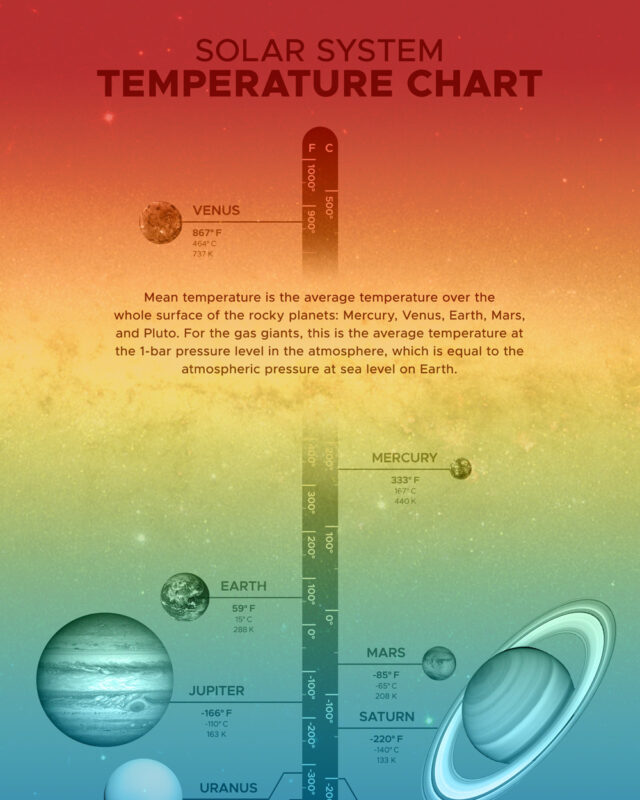
Planet Temperatures, the Mean Temperature of Each Planet
NASA puts the mean temperature of Venus at 867°F (464°C), hotter than Mercury at 333°F (167°C), even though Mercury is closer to the Sun.
This hub collects infographics about how the natural world works, including the history of life, geology, human evolution, chemistry and particle physics, with a section on space and the universe. Each page credits the scientist or artist, writes out every label on the graphic and corrects anything that current research has overtaken. Readers often start with the timeline of the universe from the Big Bang, the history of life on Earth, the geologic time scale, the chemical composition of gemstones or the Standard Model of particle physics.
NASA puts the mean temperature of Venus at 867°F (464°C), hotter than Mercury at 333°F (167°C), even though Mercury is closer to the Sun.

NASA put the cost of making antihydrogen at about $62.5 trillion per gram in 1999, and only a few nanograms have ever been produced.

The United States made 156, most of them SpaceX Falcon 9 flights, China 68 and Russia 17.

A virus such as Zika is about 40 nanometres (0.04 micrometres) across, bacteria are typically 0.5 to 5 micrometres, fine dust (PM2.5) is 2.5 micrometres or…
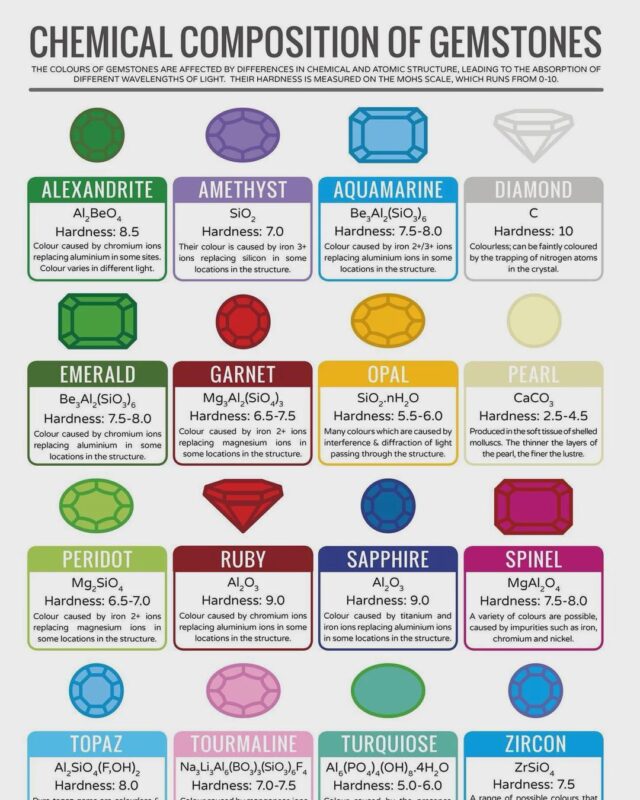
Diamond is pure carbon (C), ruby and sapphire are aluminium oxide (Al2O3) and emerald is beryl, Be3Al2(SiO3)6.
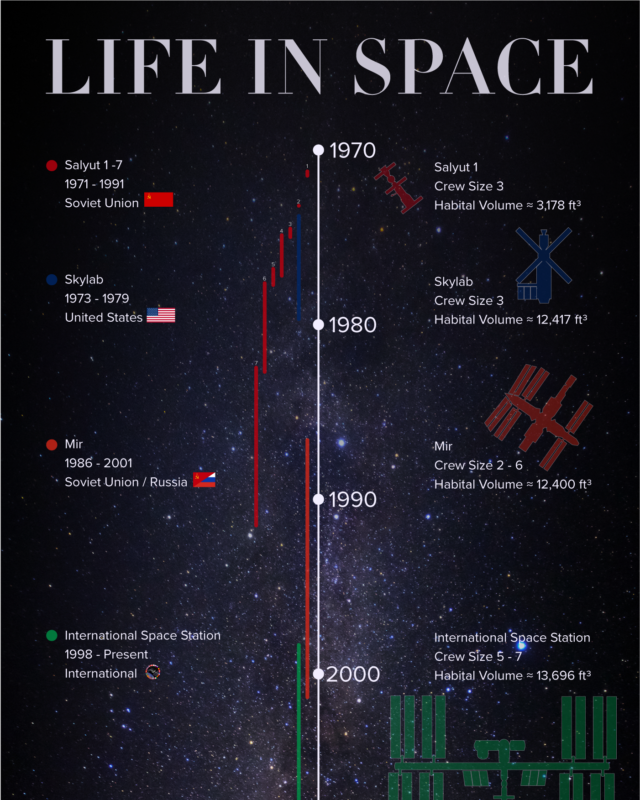
Skylab, Mir and the International Space Station followed, and people have lived in space without a break since 2 November 2000.
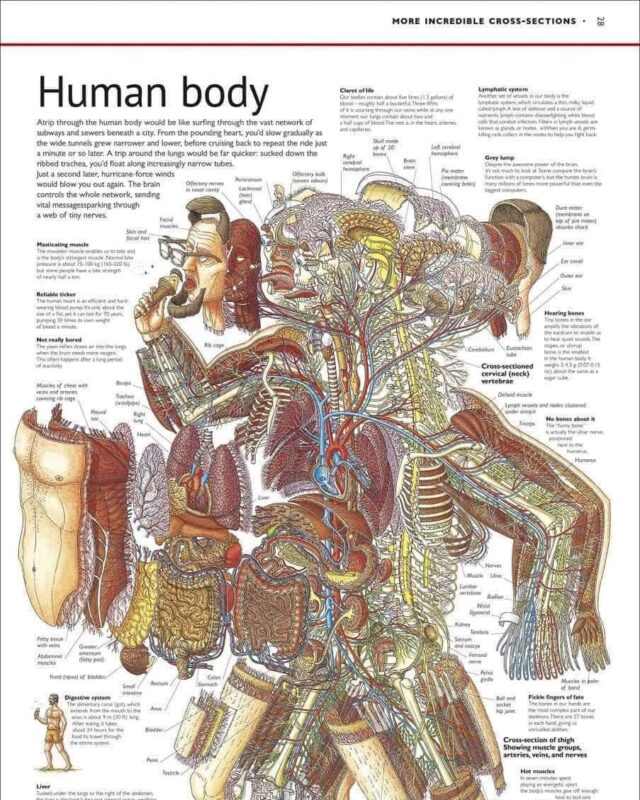
Anatomists usually group the body into 11 organ systems, such as the skeletal, muscular, circulatory and digestive systems, each made of organs that work…
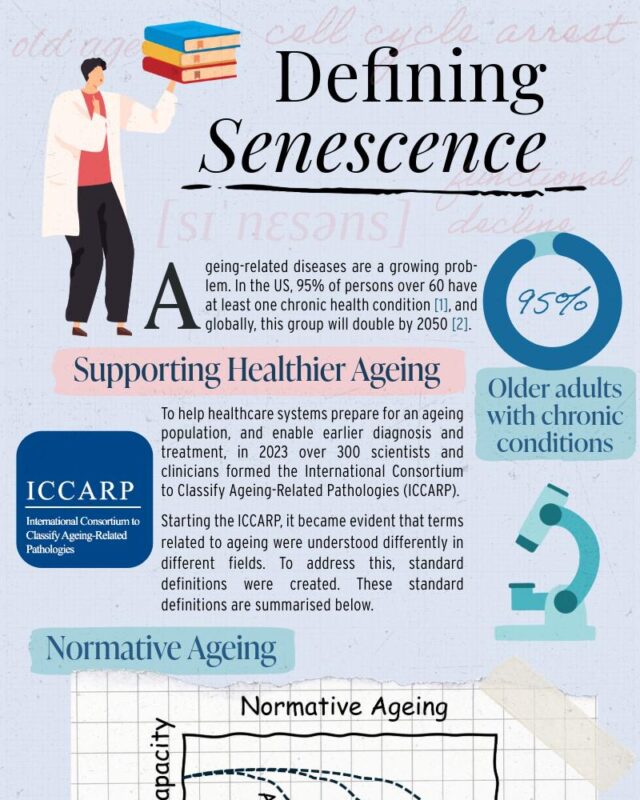
Aging is the passage of time and everything that comes with it, while senescence is the decline in normal function that happens as you age.
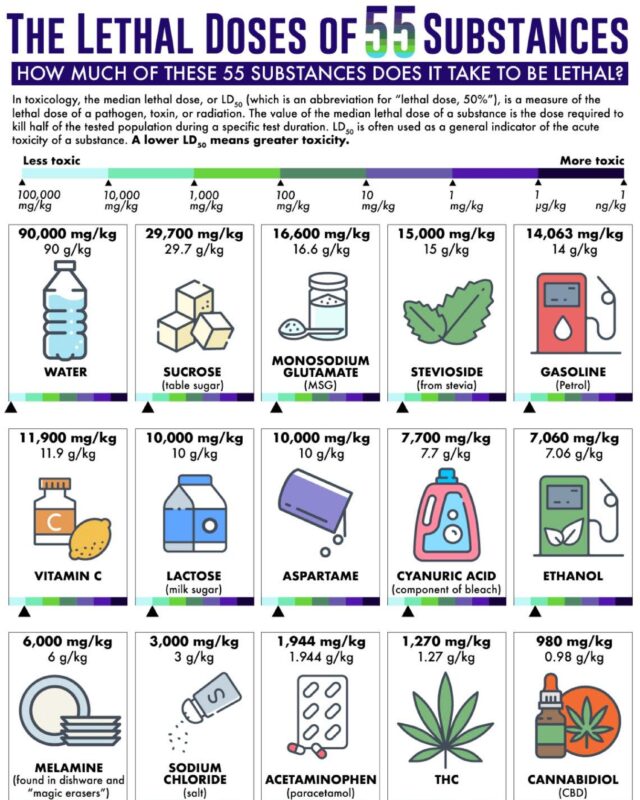
Values run from more than 90,000 mg/kg for water to about 1 ng/kg for botulinum toxin, a gap of about 11 orders of magnitude.
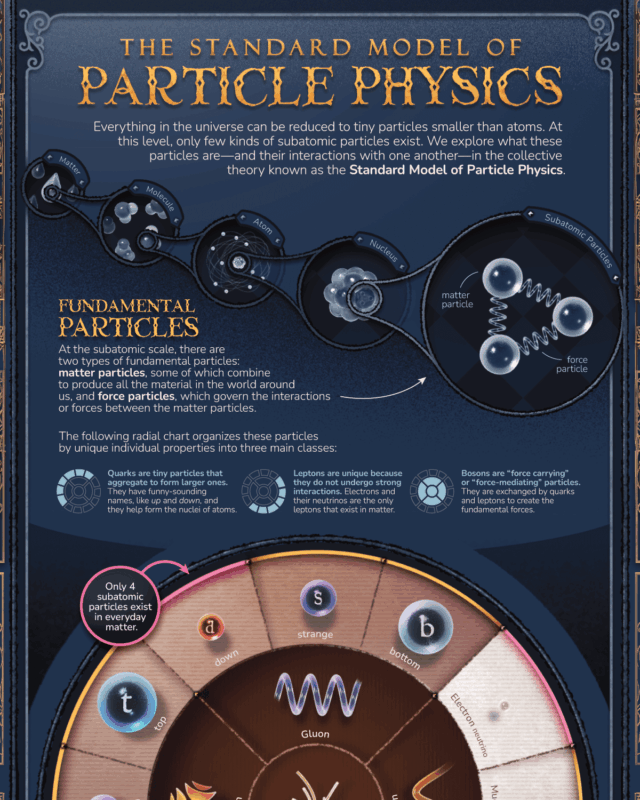
A Standard Model of particle physics poster shows the 17 fundamental particles physicists have found: six quarks, six leptons, four force-carrying bosons…

Functional groups in organic chemistry are the groups of atoms, such as the OH in alcohols or the C=O in ketones, that decide how a molecule reacts.
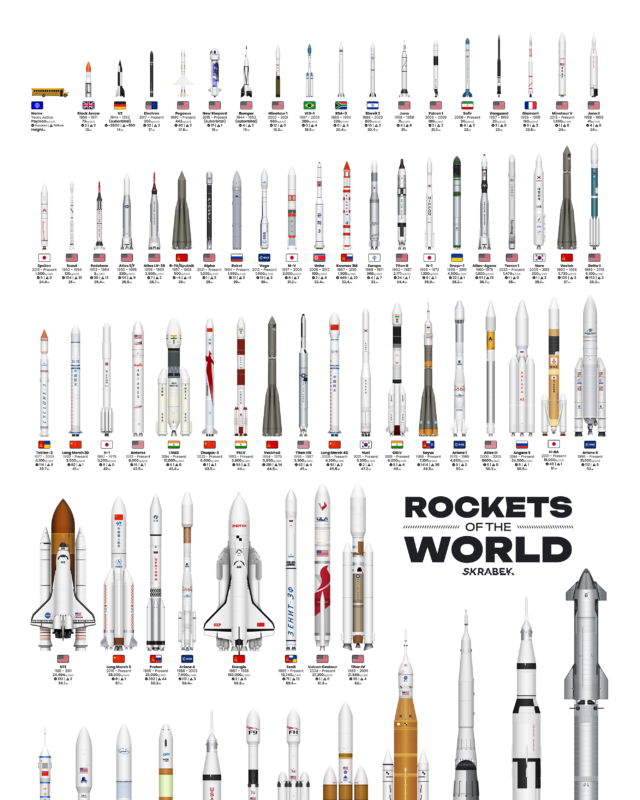
The biggest is SpaceX's Starship, 124.4 m tall, ahead of Saturn V at 111 m, while the smallest orbital rockets are under 20 m.
The 26 infographics here fall into a few groups. Deep time is covered by a geologic time scale, a history of life wheel and two human evolution charts. Chemistry pieces set out gemstone formulas, organic functional groups, the compounds in wine, lethal doses and the priciest materials by gram. Physics runs from the Standard Model and the relative size of particles to a timeline of the universe. Biology adds animal colour vision, the orchid family tree, human anatomy and definitions of senescence. Two more set out ideas rather than data, the techniques of science denial and three time travel theories.
For Earth's past, Ray Troll's Geologic Time Scale Infographic, Ray Troll Fossil Cliff draws history as a cliff of rock layers, with 17 periods and epochs and a base reading "Earth forms 4.6 billion years ago". The History of Life on Earth Timeline, Eras, Periods and Extinctions, made by Pacific Rubiales Energy in 2013, marks five mass extinctions at 443, 374, 251, 199 and 65 million years ago.
Frédéric Durillon's Timeline of the Universe, Big Bang to 13.8 Billion Years follows cosmic history to today, 13.8 billion years after the Big Bang, with the first atoms at 380,000 years and the first galaxies at 1 billion years. The Standard Model of Particle Physics Poster by Visual Capitalist arranges the 17 fundamental particles, six quarks, six leptons and five bosons, and notes that only four exist in everyday matter.
In chemistry, Andy Brunning's Compound Interest chart Chemical Composition of Gemstones, 16 Formulas and Colours shows that ruby and sapphire share one formula, Al2O3, and that diamond is the hardest at 10. For biology, the Animal Color Vision, From One to Five Cone Types chart runs from whales, with one cone type and an estimated 200 colours, to pigeons, with five and 10 billion.
Graphics on rockets, launches, space stations and exoplanets also sit in the Space and Astronomy section.
StatsPanda's graphic Most Expensive Material in the World, 15 Ranked by Gram puts antimatter at the top at $62.5 trillion per gram. That figure is a NASA estimate from 1999 for antihydrogen.
The Animal Color Vision, From One to Five Cone Types chart says dogs and cats have two cone types and see about 40,000 colours. Most primates have three cone types, and the chart credits them with 10 million colours.
Yes, by median lethal dose. CEUfast's Lethal Dose Chart of 55 Substances gives caffeine an LD50 of 192 mg/kg against 3,000 mg/kg for salt, and the chart notes that most figures come from animal tests.
Give it a permanent page where people looking for your subject find it, with your name and a link to your site. Content marketers, agencies, designers and researchers all list here.