The UK physical activity guidelines say adults should be active every day and aim for at least 150 minutes of moderate activity a week, such as brisk walking or cycling, or 75 minutes of vigorous activity such as running. Adults should also do strengthening activities on at least 2 days a week and break up long spells of sitting, according to the UK Chief Medical Officers.
What are the UK physical activity guidelines?
They are the official advice from the Chief Medical Officers of England, Scotland, Wales and Northern Ireland on how much activity people need for good health. The same guidelines apply across the whole UK, and they were last updated in July 2026, when the Chief Medical Officers’ report was refreshed with newer evidence.
For adults aged 19 to 64 there are four parts to the advice.
- Be physically active every day. Any activity is better than none and more is better still.
- Do at least 150 minutes of moderate intensity activity a week, or 75 minutes of vigorous activity, or a mix of the two.
- Do activities that build or maintain strength in the major muscle groups on at least 2 days a week.
- Sit less, and break up long periods of inactivity with at least some light activity.
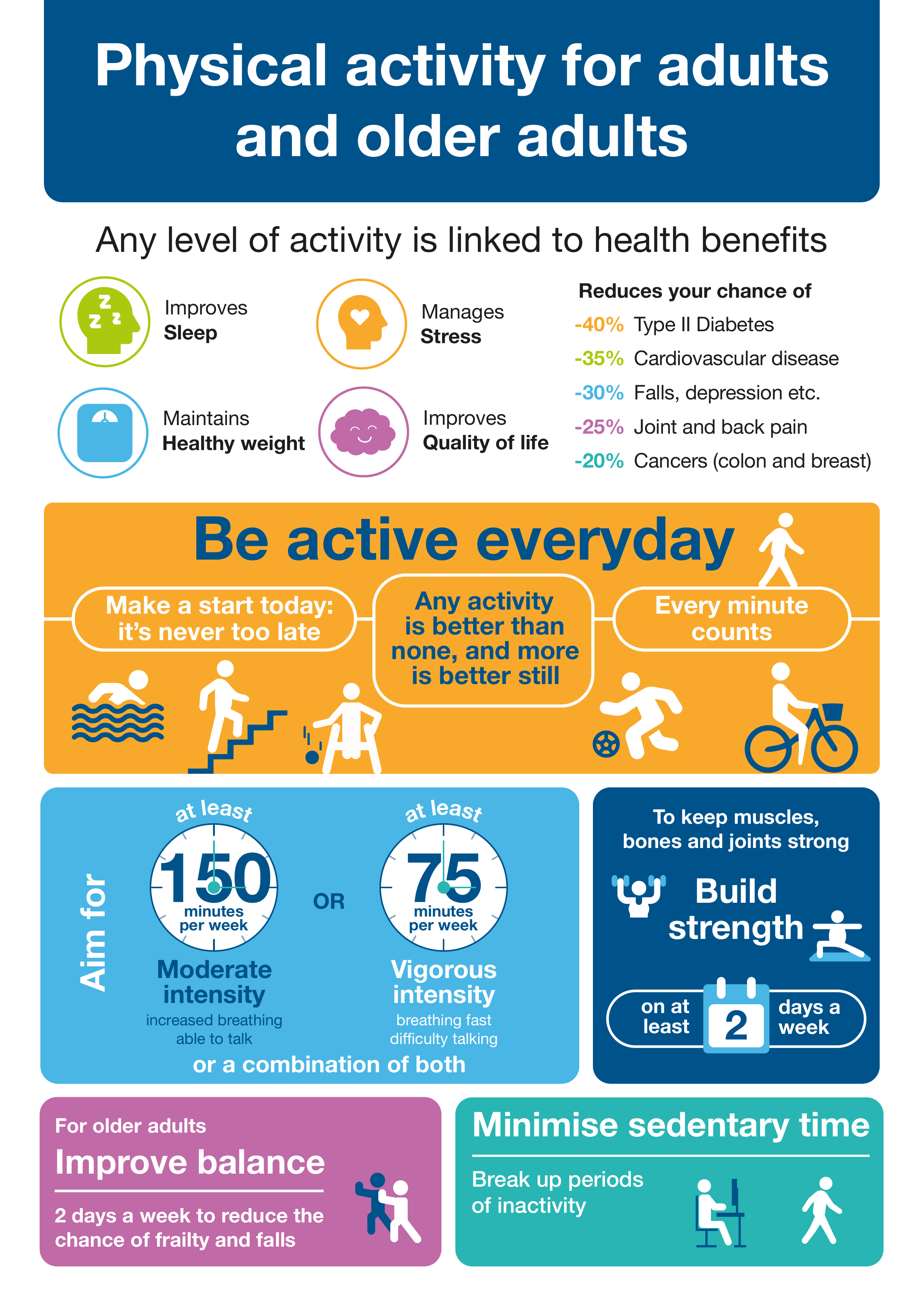
The infographic on this page is the Department of Health and Social Care’s one-page summary of the adult and older adult guidelines, updated in July 2026. The Chief Medical Officers say the infographics are intended for “widespread dissemination and use”.
| Age group | What the guidelines recommend |
|---|---|
| Babies under 1 | Active several times a day, including at least 30 minutes of tummy time spread through the day |
| Children aged 1 to 4 | At least 180 minutes a day of activity, and for 3 and 4 year olds that includes 60 minutes of moderate to vigorous activity |
| Children and young people aged 5 to 18 | An average of at least 60 minutes a day of moderate to vigorous activity across the week |
| Adults aged 19 to 64 | 150 minutes of moderate or 75 minutes of vigorous activity a week, plus strength on 2 days |
| Adults aged 65 and over | Daily activity, 150 minutes of moderate activity a week, plus strength, balance and flexibility on 2 days |
The figures in the table are from the summary of guidelines by age group in the Chief Medical Officers’ report. There is also separate advice for disabled adults and for pregnancy and after giving birth.
How much exercise should adults do a week?
At least 150 minutes (two and a half hours) of moderate activity, or 75 minutes of vigorous activity, or an equal mix of both. The guidelines also allow even shorter amounts of very vigorous activity, such as sprinting or running up stairs.
You don’t have to do it in long sessions. The 2026 report says the 150 minutes “can be accumulated in bouts of any length”, and that the same benefits still come if you fit it into one or two sessions a week. The old idea that only bouts of 10 minutes or more count has been dropped.
The 150 minutes is a target to work towards, not a pass mark. The Chief Medical Officers explain that health gains build quickly as people go from doing nothing to around 150 minutes a week, and keep rising more slowly after that. The biggest gains are for people doing fewer than 30 minutes a week now, because each extra minute does them proportionately more good.
How much exercise should you do per day?
Spread evenly across the week, 150 minutes works out at about 21 minutes of moderate activity a day, or roughly 30 minutes on 5 days. The 75 minute vigorous target is about 11 minutes a day (our calculations from the guideline figures).
The guidelines themselves don’t set a daily figure for adults. They say you should be active every day, and the NHS adult guidance suggests spreading exercise evenly over 4 to 5 days a week, or every day. Daily walking, wheeling or cycling to get somewhere is often the easiest way to fit it in, the Chief Medical Officers say.
What counts as moderate exercise?
Moderate activity raises your heart rate and makes you breathe faster, but you can still hold a conversation. The guidelines use a simple talk test. If you can talk but not sing, you are working at a moderate intensity.
The NHS gives these examples of moderate activity.
- brisk walking
- riding a bike
- water aerobics
- dancing
- doubles tennis
- pushing a lawn mower
- hiking
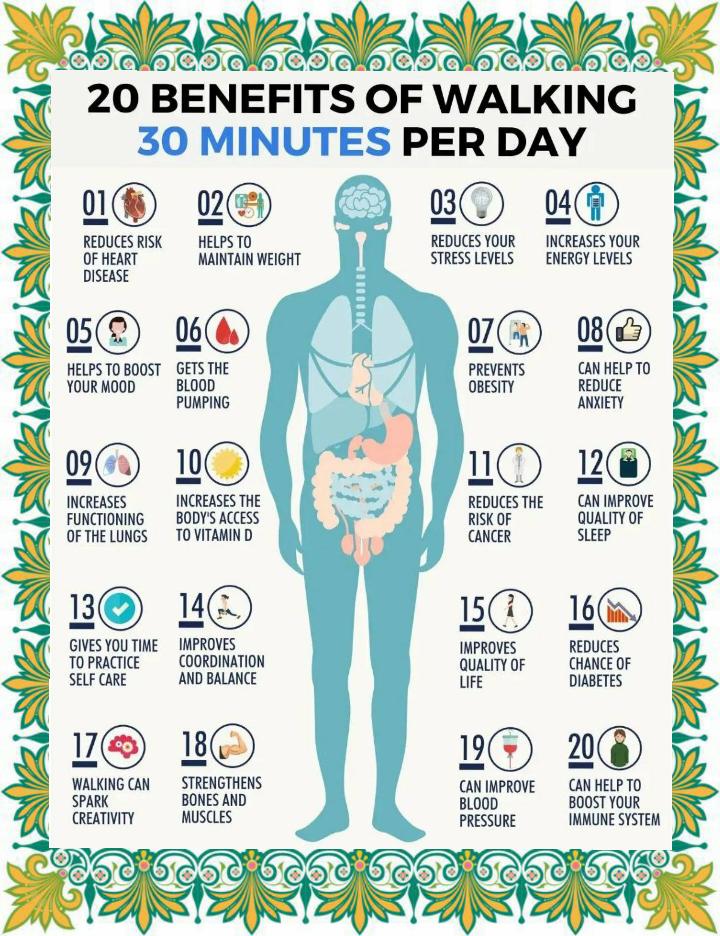
Intensity is relative to how fit you are. The 2026 report points out that what is light for a fit young person can be moderate or vigorous for an older or less active person. If you want ideas for walking in particular, our page on the benefits of walking 30 minutes a day covers it.
What counts as vigorous exercise?
Vigorous activity makes you breathe hard and fast, so you can’t say more than a few words without pausing for breath. In general, 75 minutes of vigorous activity gives similar health benefits to 150 minutes of moderate activity, according to the NHS.
Running, swimming, cycling fast or up hills, walking up stairs, skipping, aerobics, martial arts and team sports such as football, rugby, netball and hockey all count as vigorous for most people. Most moderate activities become vigorous if you put more effort in.
Very vigorous activity means short bursts of maximum effort with rest in between, often called high intensity interval training (HIIT). Examples include interval running, sprinting up hills, circuit training, spinning classes and lifting heavy weights.
Why strength exercises matter on 2 days a week
Strength work keeps your muscles, bones and joints strong, and the 2026 report says it should be treated as just as important as the 150 minutes of aerobic activity. Muscle mass and bone density start to decline naturally from around the age of 50, and strengthening activities help to delay that.
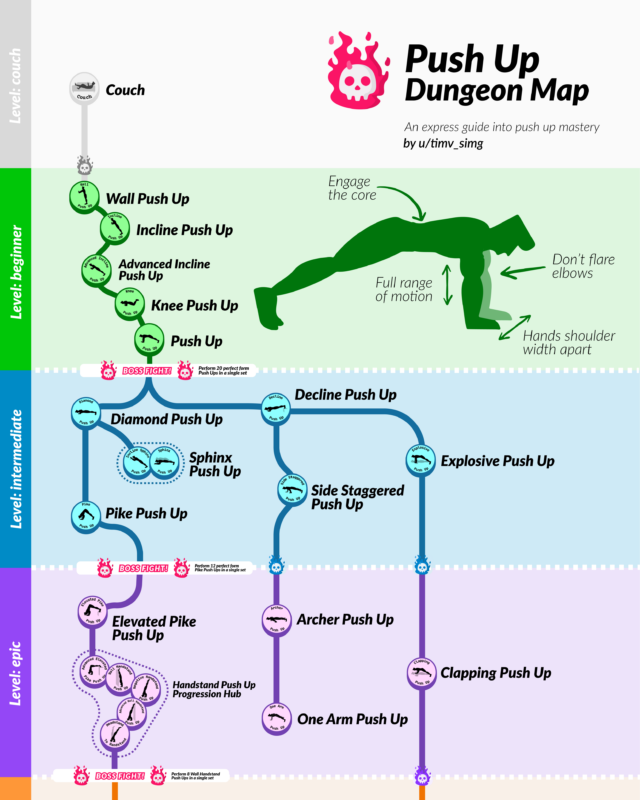
The activities should work all the major muscle groups (legs, hips, back, abdomen, chest, shoulders and arms). You don’t need a gym. The NHS lists carrying heavy shopping, yoga, pilates, tai chi, resistance bands, push-ups and sit-ups, heavy gardening such as digging, wheeling a wheelchair and lifting and carrying children. To get the benefit, do them to the point where you need a short rest before repeating the movement. Our push up progression guide is one way to start.
Muscle strengthening exercises are not always aerobic activity, so the NHS says you need to do them as well as your 150 minutes. The report also says that people who have recently been inactive, for example after an operation, and people taking GLP-1 weight loss drugs need to make a particular point of doing strength work to hold on to muscle.
Physical activity guidelines for older adults
People aged 65 and over have the same 150 minute target as younger adults, built up gradually from their current level, plus activities for strength, balance and flexibility on at least 2 days a week. As the infographic shows, balance work twice a week reduces the chance of frailty and falls.
The guidelines put more weight on light activity for older people. Even light movement, such as walking slowly, dusting or easy gardening, brings some health benefits compared with sitting, and long spells of sitting should be broken up with light activity, or at least by standing up. Tai chi, dance, aqua aerobics and other sports count towards both the aerobic and the strength and balance advice.
The Chief Medical Officers’ report says that, for healthy older adults, 30 minutes of daily moderate to vigorous activity on top of normal daily activity is roughly equal to 7,000 to 10,000 steps a day. Older adults with frailty or who have regular falls may be better starting new exercises under the supervision of a trained professional.
Sitting less and breaking up inactive time
Sitting for long periods is harmful in its own right, even for people who meet the activity targets. The guidelines don’t set a limit on sitting time, because the evidence doesn’t yet support one, but they ask everyone to sit less and break up long spells of inactivity.
The 2026 report cites a pooled analysis of 34 studies of more than a million people, which found that sitting for more than 6 to 8 hours a day, or watching TV for 3 to 4 hours a day, was linked to a higher risk of death from any cause and from cardiovascular disease. A recent review it cites estimated a 5% rise in the risk of cardiovascular events for each extra hour a day of sedentary time.
What changed in the 2026 update?
The headline amounts did not change. The July 2026 update reviewed newer evidence, drawing on the evidence review behind Australia’s 2026 guidelines, and the report says it updated the supporting evidence “without changing the overall guidance”.
What did change is the emphasis. The report gives more weight to the message that some activity is good and more is better, it says light activity done for longer can match some of the benefits of moderate activity, and it adds advice on strength training for people taking GLP-1 weight loss drugs. The guidelines were also rewritten as a web page, and the infographics were refreshed. The next full update is expected in 2030, working with the World Health Organization.
Health benefits of being active
Regular activity cuts the risk of many common diseases. The infographic sums up the evidence behind the guidelines, and says physical activity reduces the chance of each of these.
- type 2 diabetes by up to 40%
- cardiovascular disease by up to 35%
- falls and depression by up to 30%
- joint and back pain by up to 25%
- colon and breast cancer by up to 20%
Those percentages are taken from the Department of Health and Social Care’s own text version of the infographic. Being active also improves sleep, helps you manage stress, maintain a healthy weight and improves quality of life, it says.
The Chief Medical Officers are clear that exercise supports weight management rather than driving it. Diet is the main factor, and the report says more than 150 minutes a week along with eating less may be needed to lose weight. People living with overweight or obesity still lower their risk of heart disease by being active, whether or not their weight changes.
How many adults in the UK meet the guidelines?
Around six in ten. Sport England’s Active Lives Adult Survey found that 64.6% of adults aged 16 and over in England (30.9 million people) did at least 150 minutes of activity a week between mid-November 2024 and mid-November 2025, the highest since the survey began. Another 24.7% (11.8 million) did less than 30 minutes a week.
- Activity falls with age, from 71% of 16 to 34 year olds who were active to 44% of people aged 75 and over.
- Men (67%) were more likely to be active than women (62%).
- Only 45% of adults (21.5 million) did muscle strengthening activities on 2 or more days a week, the second part of the guidelines.
The other UK nations measure it in their own surveys. The Scottish Health Survey 2024 found that 62% of adults met the guidelines for moderate or vigorous activity, from 73% in the least deprived areas to 50% in the most deprived. In Wales, 59% of people said they were active for at least 150 minutes in the previous week, according to the National Survey for Wales 2024-25. The surveys use different methods, so the figures are only partly comparable.
Worldwide, the World Health Organization says 31% of adults, about 1.8 billion people, do not reach 150 minutes of moderate activity a week.
Questions about the physical activity guidelines
What are the new exercise guidelines?
The UK guidelines were updated in July 2026, but the amounts stayed the same. Adults should still aim for 150 minutes of moderate or 75 minutes of vigorous activity a week, plus strength work on 2 days. The update stresses that any activity helps, that light activity counts for something, and that strength training matters for people on GLP-1 weight loss drugs.
Is walking moderate exercise?
Brisk walking is. The NHS lists it as a moderate intensity activity, and the guidelines give it as an example. A good check is the talk test. If you are breathing faster but can still talk, you are walking briskly enough.
Can I do all 150 minutes at the weekend?
Yes. The 2026 report says the 150 minutes can be done in one or 2 sessions a week and still bring health benefits. The guidelines still recommend being active every day if you can, and sitting less during the week.
Do I need to do 10,000 steps a day?
No. The UK guidelines are set in minutes, not steps. The Chief Medical Officers’ report says that for healthy older adults, 30 minutes of daily moderate to vigorous activity is roughly the same as 7,000 to 10,000 steps, and that in older adults around 4,500 to 5,500 steps a day is linked to better health related quality of life.
How much exercise do children need?
Children and young people aged 5 to 18 should average at least 60 minutes of moderate to vigorous activity a day across the week, with a mix of activities that build movement skills, muscles and bones. Under-5s have their own guidelines, set out in the table above.
Is it safe to start exercising if I have a health condition?
For most people, yes. The Chief Medical Officers say the benefits of physical activity far outweigh the risks, even for most people with long term conditions, and that starting low and building up gradually is the safest approach. The NHS advises speaking to your GP first if you have not exercised for some time or have medical concerns.
Sources
- Department of Health and Social Care, Physical activity guidelines, adults and older adults, infographic updated July 2026 (the infographic on this page, with its text version)
- UK Chief Medical Officers, UK Chief Medical Officers’ physical activity guidelines, updated July 2026
- NHS, Physical activity guidelines for adults aged 19 to 64 and Physical activity guidelines for older adults
- Sport England, Active Lives Adult Survey November 2024-25 report, published April 2026
- Scottish Government, The Scottish Health Survey 2024, chapter 7 physical activity
- Welsh Government, National Survey for Wales headline results, April 2024 to March 2025
- World Health Organization, Physical activity fact sheet
Contains public sector information published by the Department of Health and Social Care and licensed under the Open Government Licence v3.0. The infographic is reproduced unchanged and carries no departmental logo. Its use here does not imply any endorsement by DHSC. This page is general information, not medical advice.