
Drinks
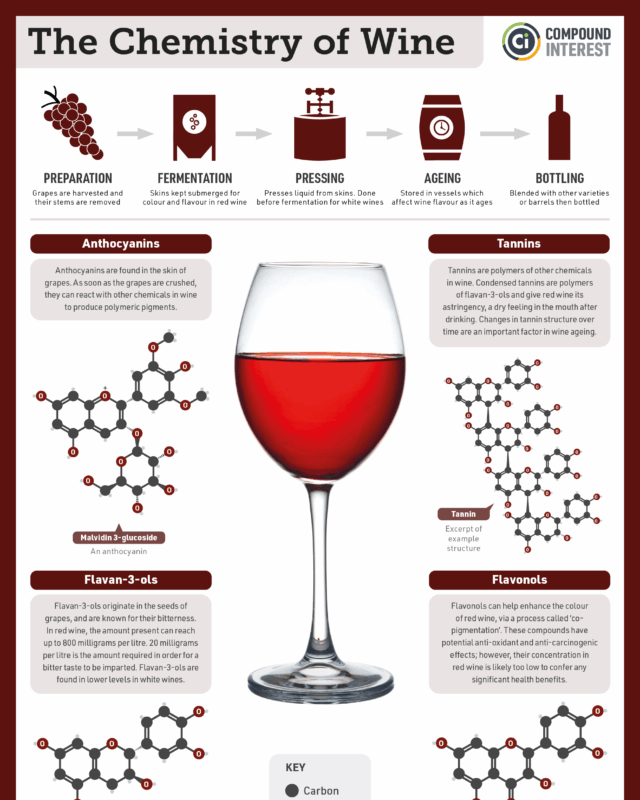
The Chemistry of Wine, Key Compounds and Winemaking Steps
An average red wine ends up about 86% water and 12% alcohol, with small amounts of glycerol, acids, tannins and other phenolic compounds.
This section covers what we drink, including coffee styles, how wine and champagne are made, grape varieties and when bars close. Each page credits the creator, sets out every step or item on the graphic and explains each step in plain words. Start with how to make coffee 38 ways, the chemistry of wine, the champagne production process, De Long's wine grape varietal table or bar closing times by state. The coffee guide runs from a ristretto to an Irish coffee, and the wine pages cover grapes, fermentation and the key compounds in red wine.
An average red wine ends up about 86% water and 12% alcohol, with small amounts of glycerol, acids, tannins and other phenolic compounds.

The bottles age on their lees for at least 15 months before the sediment is removed and the bottle is topped up, corked and labelled.

A wine varietal is a wine made mainly from one grape variety and named after it, such as Merlot or Sauvignon Blanc.

Most states close bars at 2:00 a.m.: 30 states and Washington, DC, on VinePair's 2022 map.
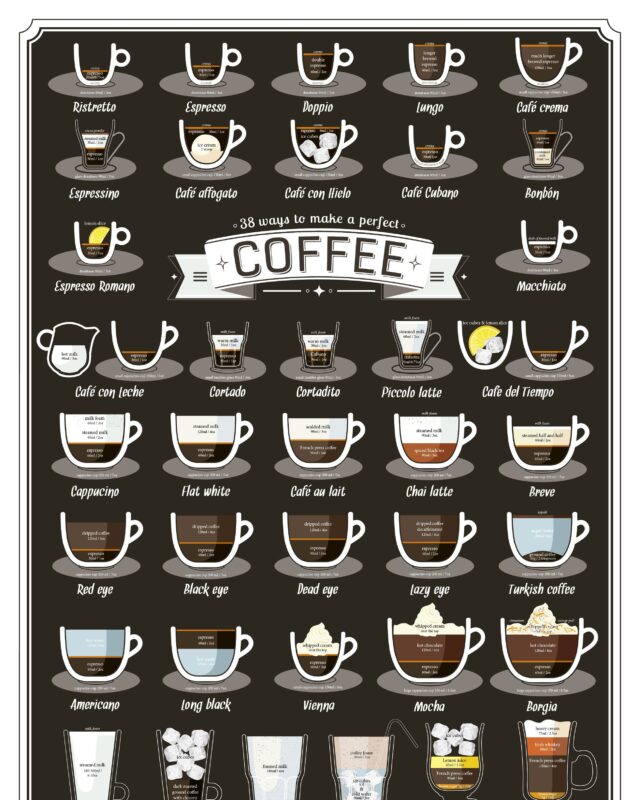
Most café drinks start with a 30 ml espresso shot, then change the amount of milk, foam, water or ice to make a cappuccino, flat white, latte or americano.