What a generation timeline shows
A generation timeline infographic sets each US generation’s birth years against the events they lived through. The usual ranges are the Silent Generation (born 1928 to 1945), Baby Boomers (1946 to 1964), Generation X (1965 to 1980), Millennials (1981 to 1996) and Gen Z (1997 to 2012). In a Pew survey, every generation asked named 9/11 as the event with the biggest impact.
The infographic by Visual Capitalist pairs that timeline with results from a 2016 Pew Research Center survey, in which 2,025 US adults were asked to name the 10 historic events in their lifetime that had the greatest impact on the country [1][2]. Below are the events that shaped each generation, with the share of each one that named them.
US generations by birth year
These are the birth years Visual Capitalist uses, which match the definitions used by Pew Research Center [1][3]. The ages are the ones each group reaches in 2026 (our arithmetic).
| Generation | Born | Age in 2026 | Events of their formative years |
|---|---|---|---|
| Silent Generation | 1928 to 1945 | 81 to 98 | World War II, the Korean War |
| Baby Boomers | 1946 to 1964 | 62 to 80 | JFK assassination, Vietnam War, moon landing, civil rights movement |
| Generation X | 1965 to 1980 | 46 to 61 | Challenger disaster, fall of the Berlin Wall, Gulf War |
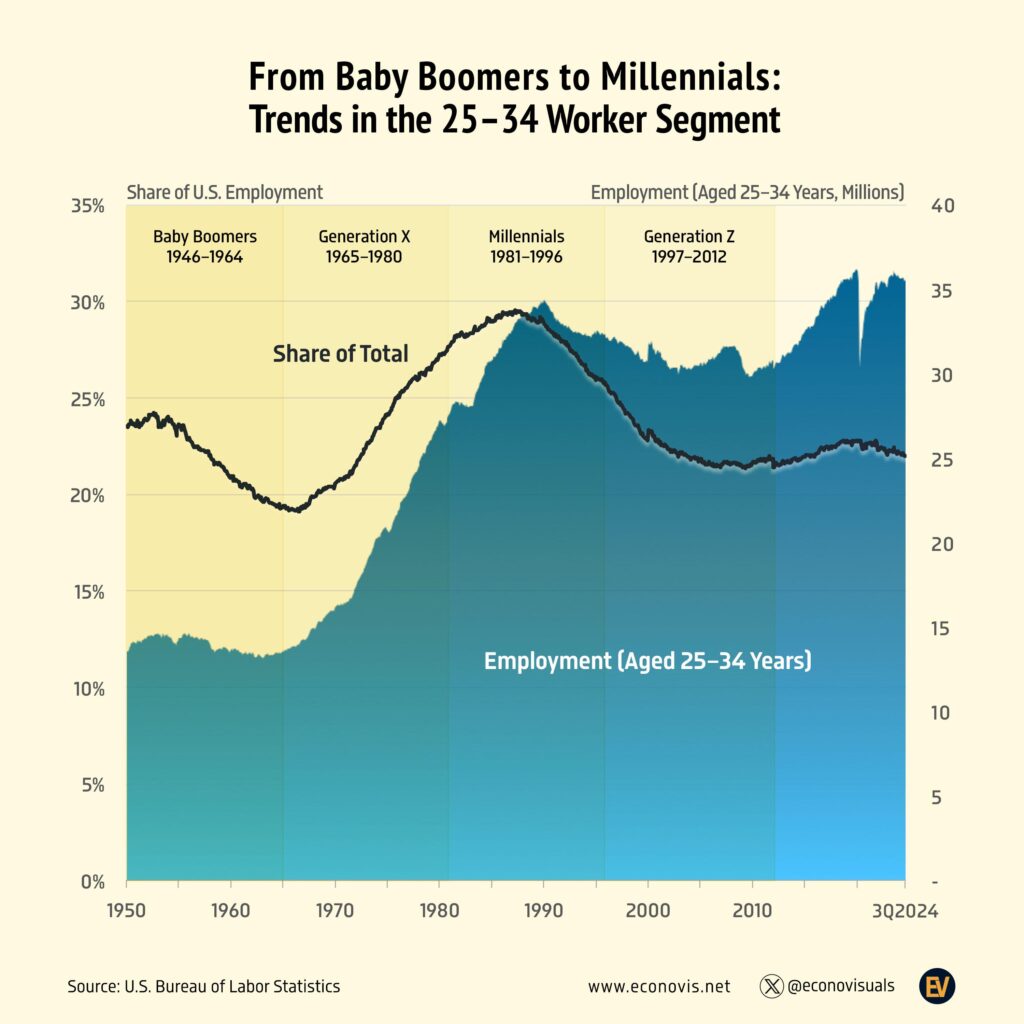
| Millennials | 1981 to 1996 | 30 to 45 | 9/11, Iraq and Afghanistan wars, Great Recession, Obama election |
| Generation Z | 1997 to 2012 | 14 to 29 | Smartphones and social media, COVID-19 pandemic |
| Generation Alpha | 2013 onwards | 13 and under | COVID-19 pandemic |
Pew stresses that generational cut-off points are not an exact science and should be treated as tools for analysis. The Baby Boomers are the only generation officially designated by the US Census Bureau, based on the surge in births after World War II from 1946 and the fall in birth rates after 1964 [3].
Events that shaped the Silent Generation
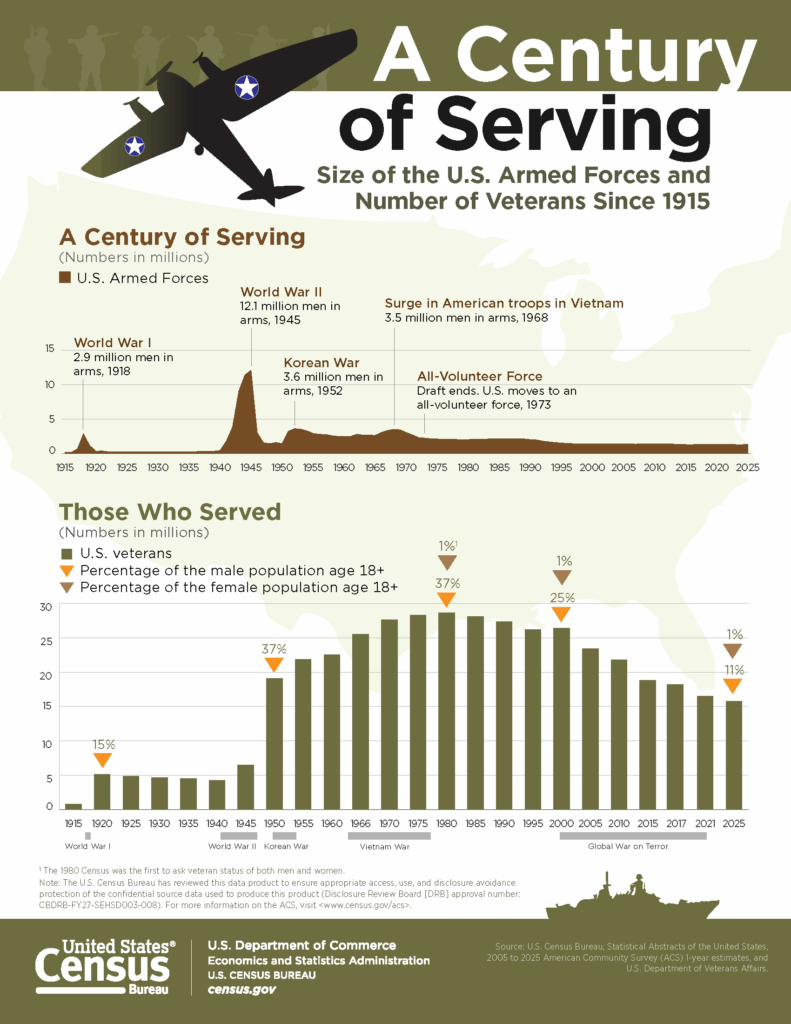
The oldest members of the Silent Generation were 11 when World War II began and teenagers when it ended [1]. In the Pew survey, 59% of them named 9/11 and 44% named World War II, followed by the assassination of John F. Kennedy (41%), the Vietnam War (37%) and the moon landing (29%) [1][2]. They were the only generation to name the Korean War (18%), and with four wars in their top 10 they named more conflicts than any other group [1].
The tech revolution still made their list. Even though the youngest of them were in their mid to late forties when mobile phones became common in the 1990s, 27% named it [1]. Pew grouped the few respondents from the Greatest Generation (born before 1928) with the Silent Generation for this survey [2].
Events that shaped Baby Boomers
For Baby Boomers, 9/11 came first (70%), followed by the Kennedy assassination in 1963 (45%), the Vietnam War (41%), the Obama election (38%) and the 1969 moon landing (35%) [1][2]. The civil rights movement (18%), the fall of the Berlin Wall and end of the Cold War (16%) and the assassination of Martin Luther King Jr. in 1968 (15%) also made their top 10. Boomers were the only generation to name King’s assassination, and Black respondents were far more likely to name it than white respondents [1][2].
Pew also points to television, which expanded dramatically while Boomers were growing up and changed how they connected with the world [3].
Events that shaped Generation X
Generation X put 9/11 first (79%) and the 2008 election of Barack Obama second (40%), followed by the fall of the Berlin Wall and end of the Cold War (21%), the tech revolution (20%) and the wars in Iraq and Afghanistan (18%) [1]. Two events appeared on no other generation’s list, the 1991 Gulf War (15%) and the 1986 Challenger space shuttle disaster (14%) [1][2]. Gay marriage, Hurricane Katrina, the Columbine school shooting, the Orlando nightclub shooting and the Oklahoma City bombing were each named by 9% or 10% [1].
Gen X grew up as the computer revolution was taking hold, which Pew counts among the generation-shaping changes in technology [3].
Events that shaped Millennials
Millennials named 9/11 more than any other generation, at 86% [1][2]. Most of them were between 5 and 20 when the attacks happened, old enough to understand what it meant, which Pew gives as one reason it drew the line between Millennials and Gen Z at 1996 [3]. The Obama election came second (47%), when most Millennials were between 12 and 27, followed by the Iraq and Afghanistan wars (24%), the 2015 Supreme Court ruling legalising gay marriage (19%), the tech revolution (18%) and the 2016 Orlando nightclub shooting (17%) [1][3].
Several events on their list appeared on no other generation’s top 10, including the killing of Osama bin Laden (10%), the Sandy Hook school shooting (7%), the Boston Marathon bombing (7%) and the Great Recession (7%) [2]. Pew notes that most Millennials entered the workforce at the height of that recession, which has shaped their earnings and life choices [3].
Events that shaped Gen Z
Gen Z is on the timeline but not in the survey results, because the Pew survey was carried out in 2016, when the oldest members were only 18 or 19 [1]. Visual Capitalist says opinions on more recent events had not been collected and that it is too early to say which ones will last [1].
What sets Gen Z apart, according to Pew, is technology. The iPhone launched in 2007, when the oldest Gen Zers were 10, and by their teens most young Americans went online through mobile phones and social media. Things Millennials adapted to as they grew up are simply assumed by those born after 1996 [3]. Most of Gen Z also has little or no memory of 9/11 [3].
The biggest shared event of their lives so far is the COVID-19 pandemic, which closed schools and colleges across the US in 2020. The infographic marks COVID-19 on the timeline and says it remains to be seen how it will be remembered by history [1]. Other events from Gen Z’s childhood and teens include the Great Recession, the elections of Barack Obama and Donald Trump, and the legalisation of same-sex marriage in 2015.
Events that unite every generation
The September 11, 2001 attacks stand out above everything else. About three quarters of all adults (76%) included them in their top 10, and the share was a majority in every generation, from 59% of the Silent Generation to 86% of Millennials [2]. The election of Barack Obama came second overall at 40%, and every other event was named by fewer than a quarter of adults [2].
Only four events made the top 10 of all four generations surveyed, which were 9/11, the Obama election, the wars in Iraq and Afghanistan, and the tech revolution [2]. The rankings also varied by race. Among Black respondents, roughly six in ten named the Obama election, as many as named 9/11, and the civil rights movement ranked third for them but missed the top 10 for white respondents [2]. Pew found little difference between men and women, between regions or between Republicans and Democrats on the top two events [2].
Pew also warns against reading too much into the gaps between generations. Younger adults have lived through fewer events, so Millennials not naming World War II doesn’t mean they think it unimportant. It simply didn’t happen in their lifetime [2].
Questions about generation timelines
What major events did Gen Z experience?
The COVID-19 pandemic is the largest shared event so far, along with growing up with smartphones and social media from childhood [1][3]. Gen Z also lived through the Great Recession as children and the 2015 legalisation of same-sex marriage, but no survey like Pew’s 2016 study has yet asked them to rank the events of their lifetimes.
What years are each generation?
Using Pew’s definitions, the Silent Generation was born from 1928 to 1945, Baby Boomers from 1946 to 1964, Generation X from 1965 to 1980, Millennials from 1981 to 1996 and Gen Z from 1997 to 2012. Gen Alpha follows from 2013 [1][3].
What was the most significant event for Baby Boomers?
9/11, named by 70% of Boomers in the Pew survey. The Kennedy assassination (45%) and the Vietnam War (41%) came next [1].
What major events have Millennials lived through?
9/11, the wars in Iraq and Afghanistan, the 2008 financial crisis and Great Recession, the election of the first Black president, the legalisation of gay marriage, the rise of the internet and smartphones, and the COVID-19 pandemic [1][3].
Is someone born in 1980 or 1997 on the cusp?
Yes, people born near a boundary often identify with both generations. Pew counts 1980 as the last Gen X year and 1997 as the first Gen Z year, but says the youngest and oldest in a generation may feel more in common with the neighbouring group than their own [3].
Sources
- Visual Capitalist, Timeline, Key Events in U.S. History that Defined Generations, 2021, the original post for this infographic (Generational Power Index 2021 and Pew survey data).
- Pew Research Center, Americans Name the 10 Most Significant Historic Events of Their Lifetimes, December 2016.
- Pew Research Center, Defining generations, where Millennials end and Generation Z begins, January 2019.
Last reviewed 10 November 2026